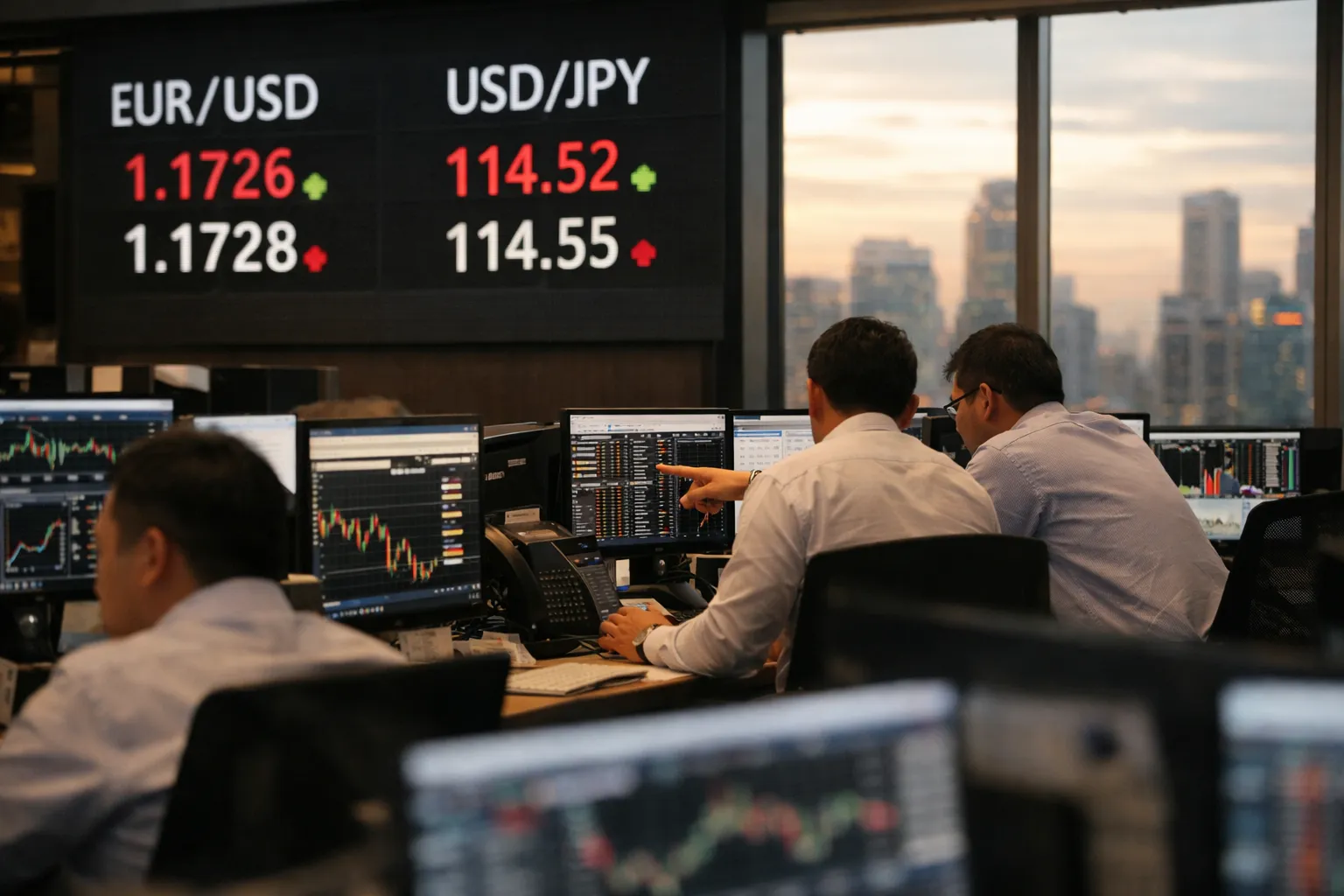
Hong Kong and Singapore regulators this week issued coordinated guidance requiring foreign-exchange trading venues, retail brokers and liquidity providers operating in their jurisdictions to publish standardized execution metrics—specifically end‑to‑end latency, average slippage by instrument and explicit last‑look parameters.
What the guidance says
The Hong Kong Monetary Authority (HKMA) and the Monetary Authority of Singapore (MAS) framed the guidance as a market‑conduct and disclosure measure aimed at improving transparency in electronically traded FX. Under the guidance, platforms and market makers must make the following data publicly accessible on a quarterly basis and on request to clients:
- Median and 95th‑percentile end‑to‑end order latency across major currency pairs (measured from order entry to execution confirmation);
- Average and distributional slippage relative to mid‑market benchmarks, separately reported for retail and institutional order types;
- Last‑look policy details, including maximum duration and the share of quotes rejected or re‑priced under last‑look; and
- Routing logic summaries—how orders are handled between internalization, primary ECNs and non‑bank liquidity providers (NBPs).
Regulatory rationale
Both supervisors said the move is intended to reduce information asymmetry between FX end‑users and execution venues and to “promote fair dealing and better price discovery” in a market increasingly dominated by high‑frequency flows and non‑bank liquidity provision. MAS noted that greater execution transparency will help institutional and retail clients better compare execution quality, while HKMA emphasized market resilience and integrity.
Immediate market reaction
Brokers, electronic communication networks (ECNs) and prime brokers in Singapore and Hong Kong reported a scramble to assemble historical execution data and to build public reporting pages that meet the new template. Several retail brokers told Forex Trading Daily they expect to publish initial disclosure pages within one quarter to meet the guidance’s suggested timetable.
Execution‑tech vendors and data aggregators view the guidance as a business opportunity. “Clients now need certified, auditable measures of latency and slippage,” said a head of sales at a multilateral matching engine provider. “There will be demand for standardized measurement layers and tamper‑proof reporting.”
Practical effects on pricing and technology
Traders can expect three near‑term consequences:
- More detailed execution comparisons. Institutional TCA (transaction cost analysis) desks will be able to compare venue metrics versus their internal benchmarks with greater clarity, potentially shifting flow away from venues with higher slippage or opaque last‑look behavior.
- Pressure on last‑look policies. Where a venue’s public data shows high reject rates or long last‑look durations, buy‑side clients may demand price concessions or move flow elsewhere. Some brokers may shorten last‑look windows to avoid reputational harm.
- Upgrades to monitoring and certification. Independent third‑party auditors and market‑data firms are likely to see demand for attestation services to verify that published numbers reflect actual executions rather than selectively chosen samples.
What this means for retail traders
Retail FX traders will gain clearer, comparable metrics to evaluate broker execution quality. That could include simple dashboards showing average slippage on EUR/USD market orders during different volatility regimes or charts detailing the broker’s last‑look rejection rate. For active retail scalpers and low‑latency strategies, the guidance may drive shifts toward brokers that publish low latency and low reject rates.
Potential unintended consequences
Industry participants warned of some risks. Market makers, concerned about intellectual property and front‑running, say too‑detailed disclosures could reveal proprietary quoting or matching logic. Others raised the possibility that venues might publish optimistic data windows while excluding other time periods unless the template mandates comprehensive coverage.
Regulators acknowledged these concerns and included safeguards in the guidance: disclosures should cover representative samples across trading hours and volatility regimes, with auditors able to request raw logs if inconsistencies are suspected.
Broader market‑structure implications
The coordinated move by MAS and HKMA could influence other regional regulators and market operators. Asia’s FX market, long characterized by a mix of bank and non‑bank liquidity providers and diverse venue practices, may see a re‑rating of venue competitiveness based on measurable execution quality rather than headline spreads alone.
Next steps and timelines
The guidance suggests a phased implementation: initial public disclosures within three months, audited quarterly reports within nine months, and spot inspections thereafter. Industry groups in Singapore and Hong Kong said they will consult with regulators on technical measurement standards to ensure like‑for‑like comparisons across platforms.
Bottom line
For FX traders, the guidance promises more factual grounds for execution venue selection: not just who posts the tightest bid/ask, but who actually executes orders within advertised latency windows and with predictable slippage. For brokers and venues, the requirement adds compliance and technology costs—but also an opportunity to differentiate by demonstrable execution quality. As electronic FX continues to evolve, execution transparency looks set to become a new competitive battleground in Asia’s markets.